[Note: Prototype visuals only. Final art style will differ.]
Now that I have a playable structure for the timeline with several puzzles in place, I’m working on the moment-to-moment experience for the player.
You play as Eve, and the way it works is that you go through these quick, meaningful life moments (e.g. getting married, making a friend) where you always need to make a choice and see the result. You then jump to another moment, and after roughly 15 minutes and around a hundred scenes, you’ve reached the end of a life. At that point, you can pick any moment you’ve lived and resume from there. You quickly end up creating these butterfly effects and the more you try to fix things, the worse they get.
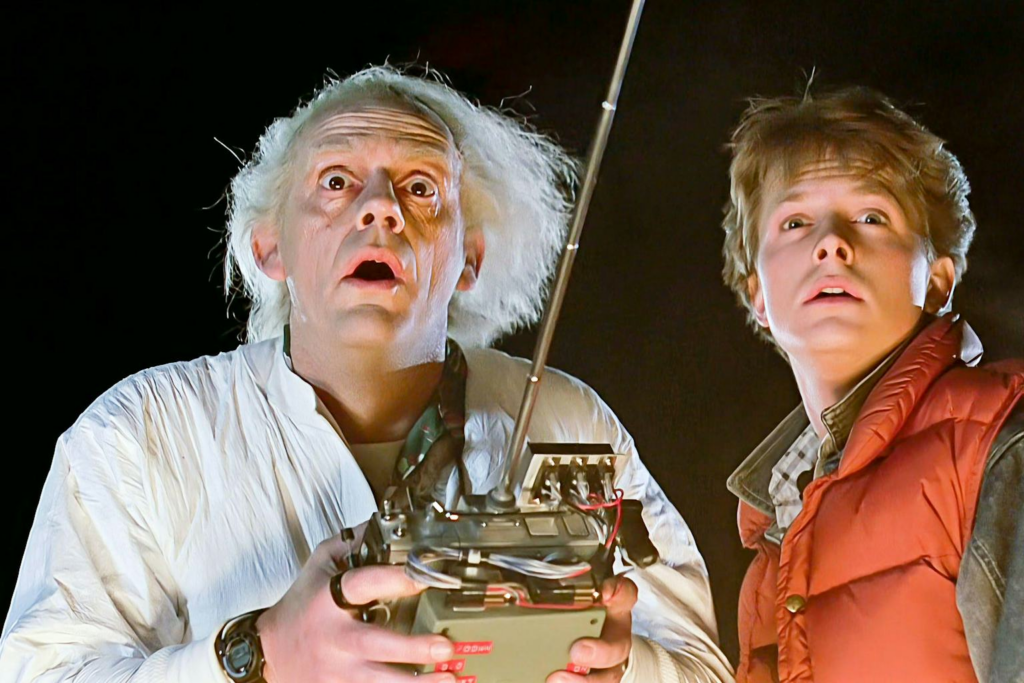
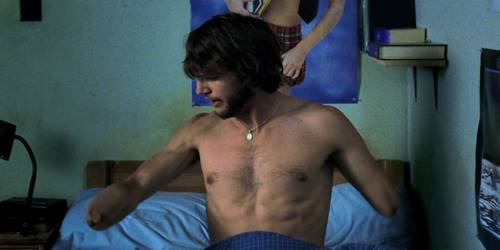
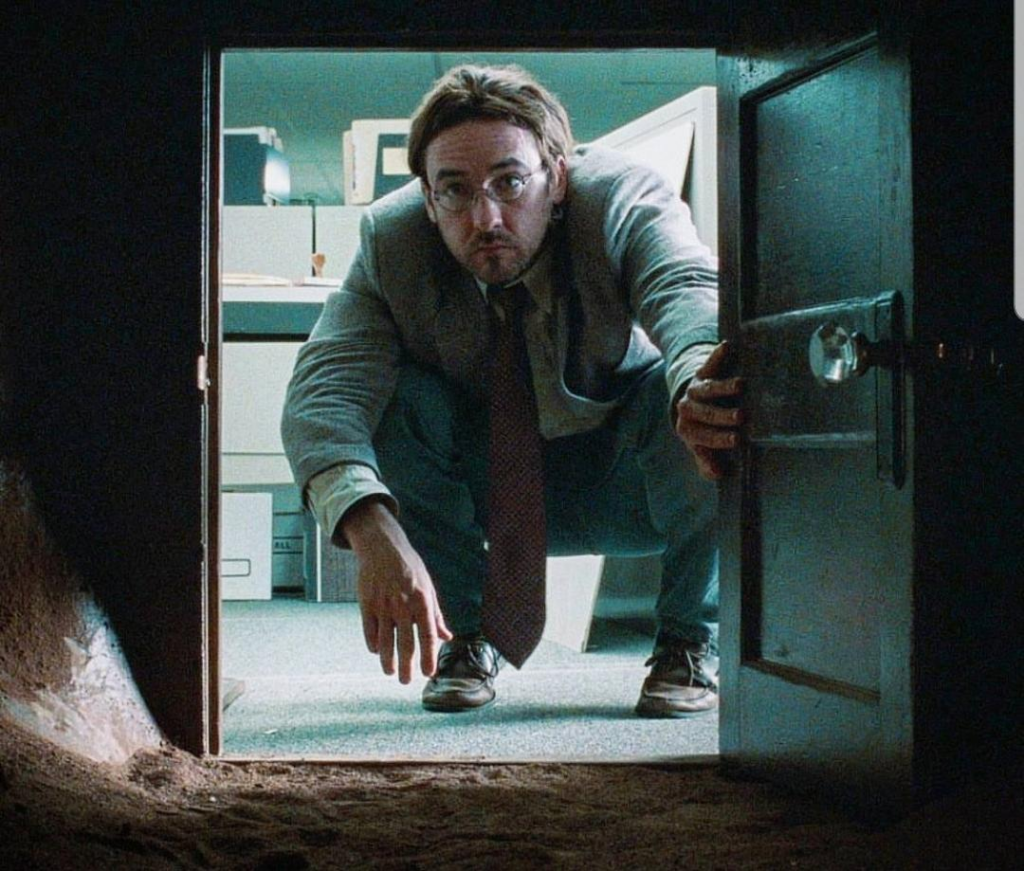
Imagine a mix of Back to the Future, The Butterfly Effect and Being John Malkovich.
Each of these moments has to feel very fast, like life is flashing before your eyes. You blink, you’re in a scene, you make a choice, you see the outcome. Blink again, next moment.
Everything happens in first person, and currently, each scene is broken down into three main parts:
- Intro: About two seconds, to establish the scene.
- Choice: Where the player has control to look around and select objects in the environment.
- Outro: Roughly three to four seconds, where you see the outcome of your choice and have no control.
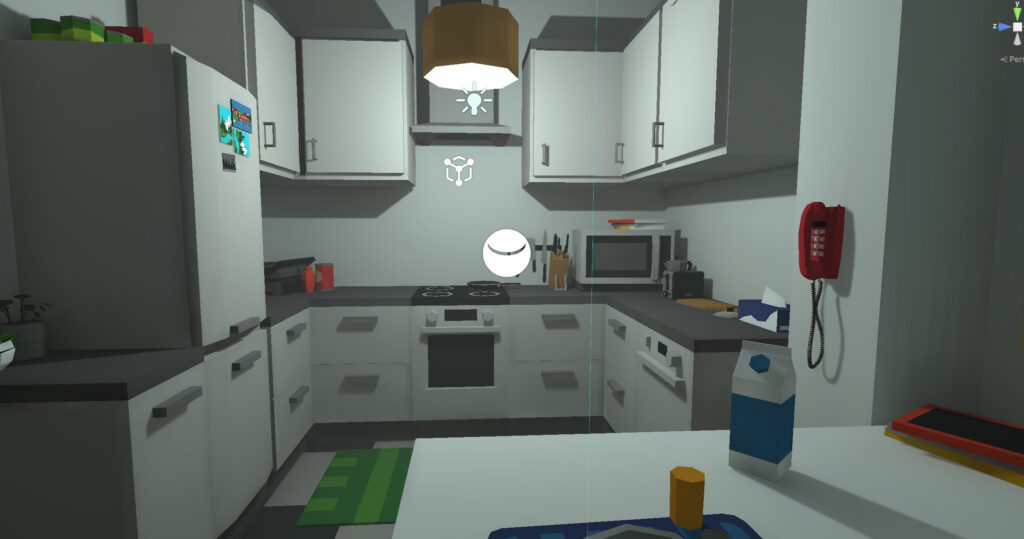
So, for example, let’s say you’re five years old and you’re in the kitchen with your father. He’s just baked some cookies, and then he suddenly has a heart attack and falls to the ground right in front of you. End of the Intro.
The player then gains control, and now you can make a choice by selecting different elements in the scene. Whenever you center an object, it works like a hotspot, showing you what you can do with it:
- Dad: Go help your dad.
- Mom (in the other room): Call your mom for help.
- Phone: Call 911.
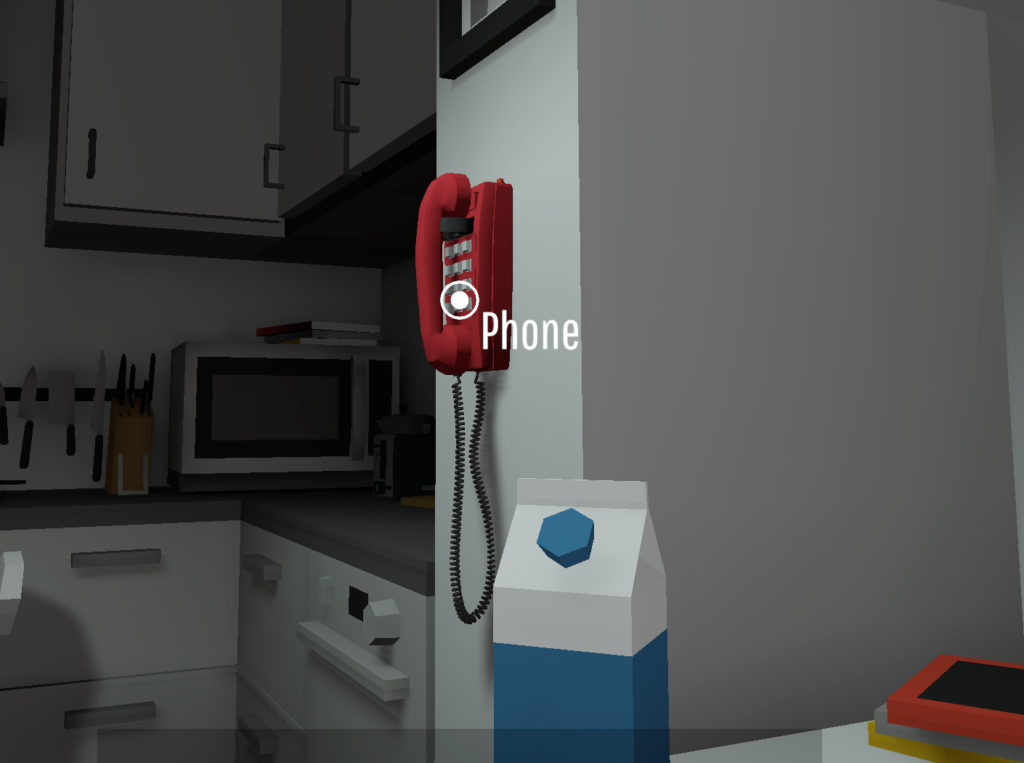
Once you’ve made a choice, you enter the Outro. So if you choose to help your dad, you see Eve go straight to him, and then the scene ends.
But now that we can actually play this in the prototype, there’s something that isn’t clicking.
In the early stages, before I had anything playable, I gathered several inspiring references and one of them was a 42-second short film called “Last Day Dream” that you can watch below.
That’s the feeling I’m after. There is no stopping. Life keeps moving whether you make a choice or not.
When a good friend played the latest prototype, he expected exactly that, and the prototype doesn’t have it. In the example above, you can look at your father, unconscious on the floor, for as long as you want. It doesn’t feel right, it’s too static.
In my previous project, 12 Minutes, you could always move around the apartment, pick up objects and decide what to do. On top of that, you knew the cop was going to come. There was always this clock ticking and you were moving through time.
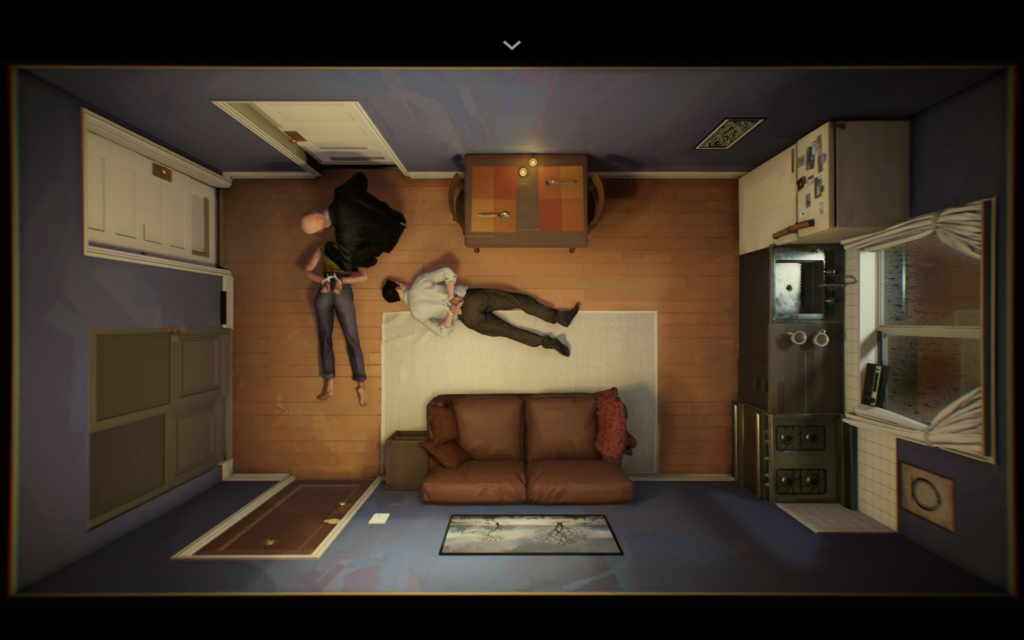
This game doesn’t have that. The movement comes from the scene-to-scene transitions, based on your choices, so the static nature of each individual moment breaks what should feel very fluid.
Two other issues became obvious:
Each object needs to clearly communicate what choosing it means.
If I look at the phone, I need to understand that the choice is “Call 911 to help my dad,” not simply “Use phone.” The ambiguity I want is around the consequences of your choices, not around what you’re actually choosing to do at that moment.
It must be clear to the player what Eve herself wants.
What would she normally choose if you didn’t interfere? For example, if she’s passionate about music and you make her choose to study science, she will be unhappy about it. Her life up to that point has shaped what she naturally wants, and you’re able to push her away from that.
So the new system needs to do three things:
- create urgency.
- remove ambiguity from the choices.
- make Eve’s own intention clear.
Before getting to it, I think it’s important to define the player’s relationship with the protagonist.
Unlike 12 Minutes, where you and the character were aware that the loop was repeating, Eve is never aware of it. Every new loop, from her point of view, is brand new. You’re the only one with the full picture and all the knowledge you’ve accumulated across lives. (The reasons for this will go in a future post.)
You are Eve’s subconscious.
The way I see it, it’s a bit like what happens when you go to an ice cream store and decide which flavor you want. You’re not conscious of the whole process of making that choice. At some point, the thought just pops into your consciousness:
“I want strawberry.”
There is a logic behind that choice, shaped by the life you’ve lived up to that point, even if you’re not consciously aware of it.
As a player, that’s the moment where you can intervene in Eve’s decision-making.
You can diverge from Eve’s natural choice, arrive at new outcomes and affect those around you.
You’re not controlling Eve directly. You’re intervening in her choice process.
With all this in mind, I’ve come up with something that I think might solve all these issues.
So when the intro finishes, instead of unlimited control in real time, the scene enters a hopefully cool-looking slow-motion state, with the object associated with Eve’s current thought (e.g. her dad on the floor) centered on screen.
This represents a brief moment of thought, and it’s the only time in the game where we hear Eve’s inner thoughts. The hotspot no longer shows you what you can do with the object. It shows you Eve’s thought about it. Going with our example, as soon as we enter that state we hear her think:
“I’m going to check on Dad.”
If you do nothing, the thought finishes, time returns to normal, Eve goes over to help him, and the game goes straight to the next moment. But if you interact, you interrupt that thought.
“Wait…”
From that point on, you can take as long as you want to look around and understand the alternatives. If you look at the phone, Eve thinks:
“I could call 911 to help Dad.”
If you look out of the kitchen toward your mom watching television, she thinks:
“I could ask Mom for help.”
These thoughts don’t commit you to anything. They’re possibilities.
Once you select one, it becomes Eve’s new intention:
“I’m going to call 911 to help Dad.”
If you don’t interrupt her again, the thought finishes, time returns to normal and she executes the action. The first thought you hear is always Eve’s own. It’s the choice her life up to that point has led her to, and it’s what happens if you do nothing. The game never stops and waits for you. It keeps moving, and you decide whether to step in.
I’m hoping this creates urgency without time pressure. To Eve, the choice happens in an instant. As her subconscious, you get to step inside it, see where she’s naturally heading, and decide whether to intervene.
I have no idea if it’s going to work, but that’s what I’m implementing next.
Acho excelente esta fase de reflexão. Na verdade o tempo para a decidir e o conhecimento do jogador sobre cada decisão será importante para motivar ao uso e interatividade.
This game is haunting, in a positive way. After playing the prototype, I kept thinking about it, and I am looking forward to see all the stories unfold. I’d like to read more about how you set the narrative in motion!